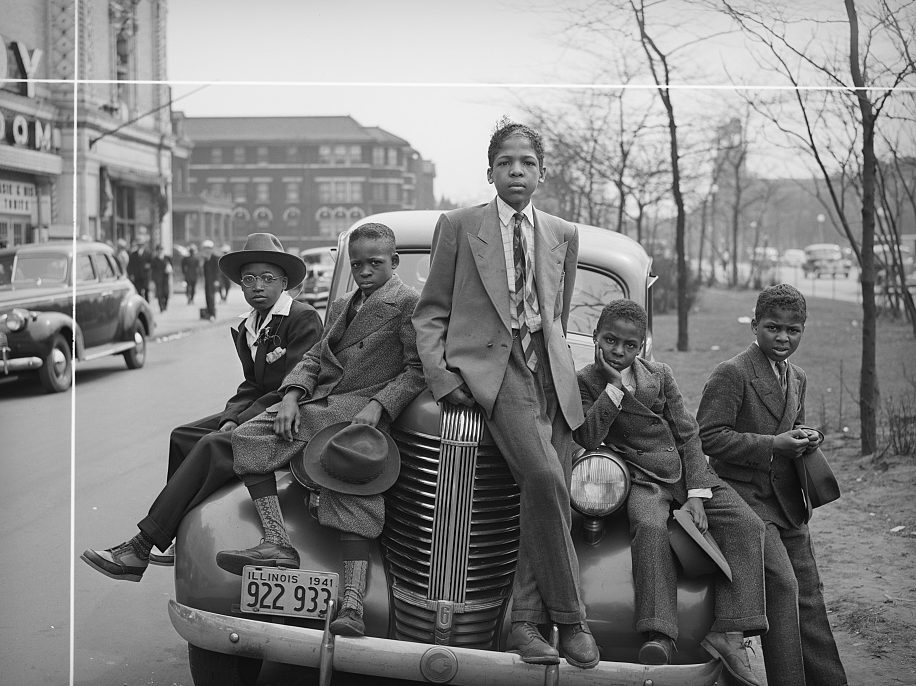
Negro boys on Easter morning. Southside, Chicago, Illinois
This photograph captures dignity in a world that offered these boys very little of it.
Five boys, dressed in their Easter best, gathered around an automobile, looking directly at the camera. They aren’t posing as victims. They look confident, curious, serious—even proud.
And yet the photograph quietly tells us that they understood the world around them. Their clothing suggests that Easter mattered: this was a day to dress well, to be seen, to participate. The car becomes almost a stage, giving them a moment to claim their place in the city.
There is also something powerful about their ages. They are still children, but several already carry themselves with the composure of adults. The tallest boy stands apart, almost like a young man already aware of the expectations placed upon him.
For me, what would be lost without this frame is the ordinary humanity of Black childhood in 1941.
History often records segregation, poverty, and discrimination. This photograph records something harder to reduce to statistics: boys who wanted to look good on Easter morning, who had personalities, friendships, confidence and dreams—and who, for one moment, simply wanted to be seen.